A Sicko’s Guide to Prepping D&D
I am once again DMing 5e
A thirteen year campaign, taken off the shelf to honor two decades of friendship. It’s engendered many strange feelings in me.
I didn’t anticipate how much honoring old things requires you to stand by their imperfections. The faults in that campaign were telling - they expressed things about me that my friends came to embrace. Removing them would be disrespectful.
That campaign is the reason I started reading blogs - to become better, for them. Ten years and a hundred books later, I am better. A decade of work, now barely applicable for its intended purpose. The anti-climax was kindling for a burning question.
What would I do different, if I could do it all again?
So for my last two months - between packing boxes, moving boxes, and unpacking boxes - I started prepping a fantasy game. Documented below, in step-by-step exhausting detail, is my answer to that “what if?”1
Collect Inspiration
Write two lists.
- Art that made you cry.
- Art that gave you chills.
Add as many as you can remember. Think about why you reacted that way to each. Note commonalities.
Charm four people into enjoying your company, intentionally or by accident. Always exactly four. Remind them how fun it is to pretend to be somewhere else. Babble about swords and wizards until they understand how much this means to you. Then be quiet, and let them babble to you about the art that’s meaningful to them. Pick a system based on the vibes of this conversation.
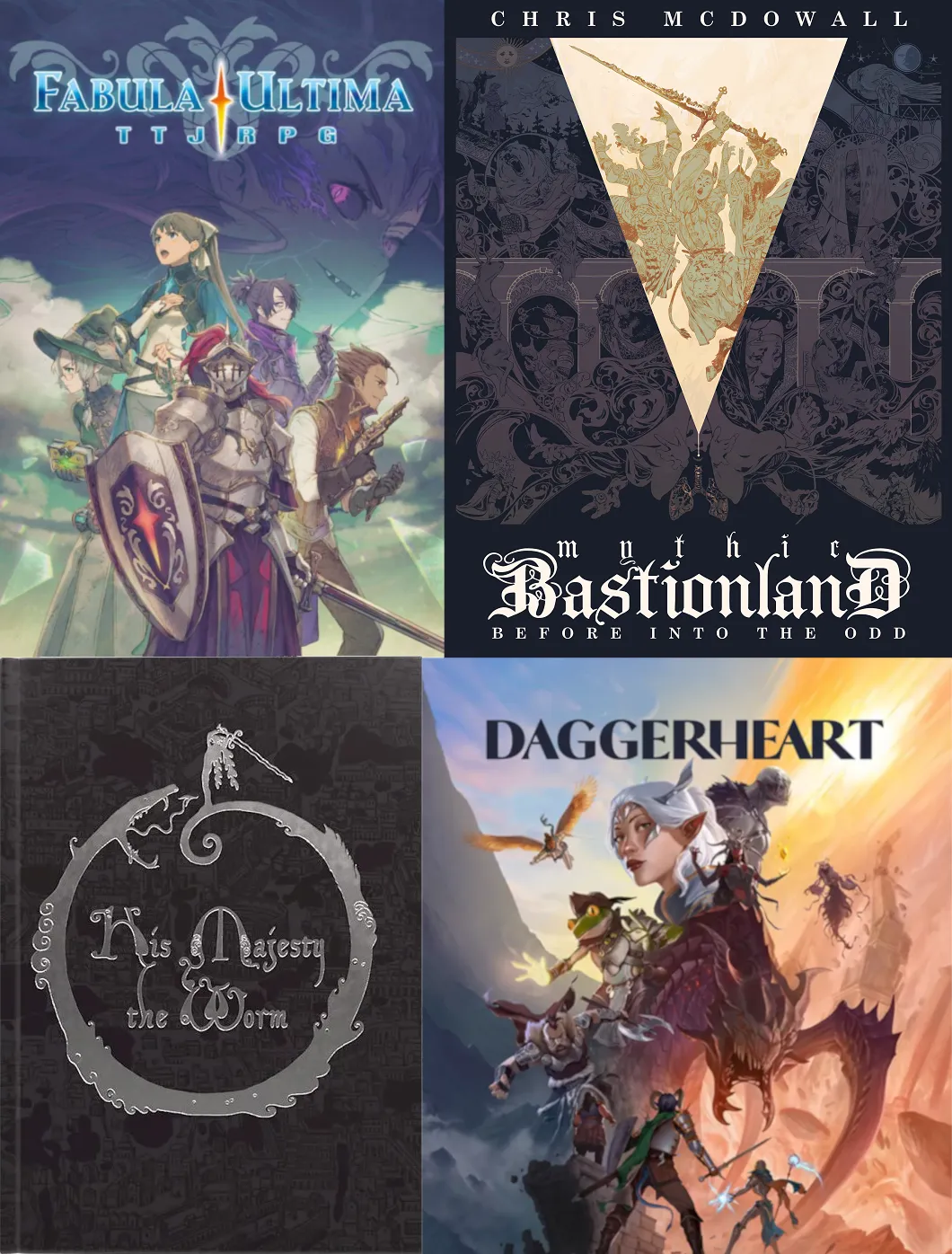
I suggest Mythic Bastionland, Fabula Ultima, Daggerheart, or His Majesty the Worm.
Create a Discord server with at least the following text channels.
- General
- Scheduling
- Schemes
- Inspiration2
- Worldwizard
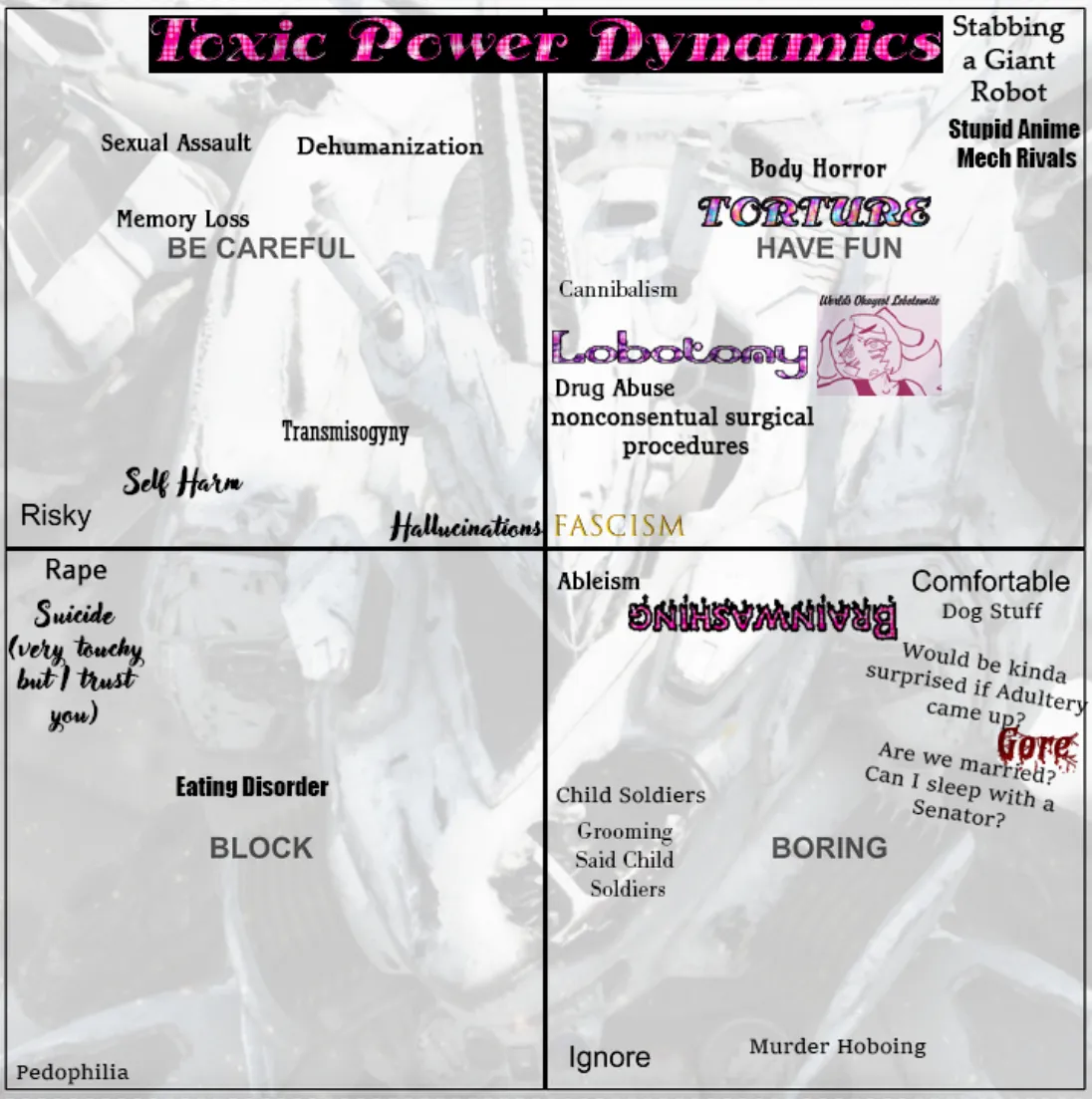
Schedule your first get together. Have everyone fill out a palette grid and post it in General before they arrive. Add game ruining powers to the bottom right and prepare to be booed. Remind them to fill the top right quadrant with their favorite fantasy tropes - both to lighten the mood and prime them for the collaborative worldbuilding to come.
Once you’re all together, have each player briefly describe what they most hope and most worry this game will become.
“I enjoy fantasy games the most when our characters are allowed to make mistakes and grow. I want my arrogant wizard to be able to say something rude and get the whole party into trouble without the players being upset. To me, these games are at their worst when we spend hours on complicated plans.”3
If preferences conflict, talk it out. Bottom-left quadrant topics are not up for debate.4
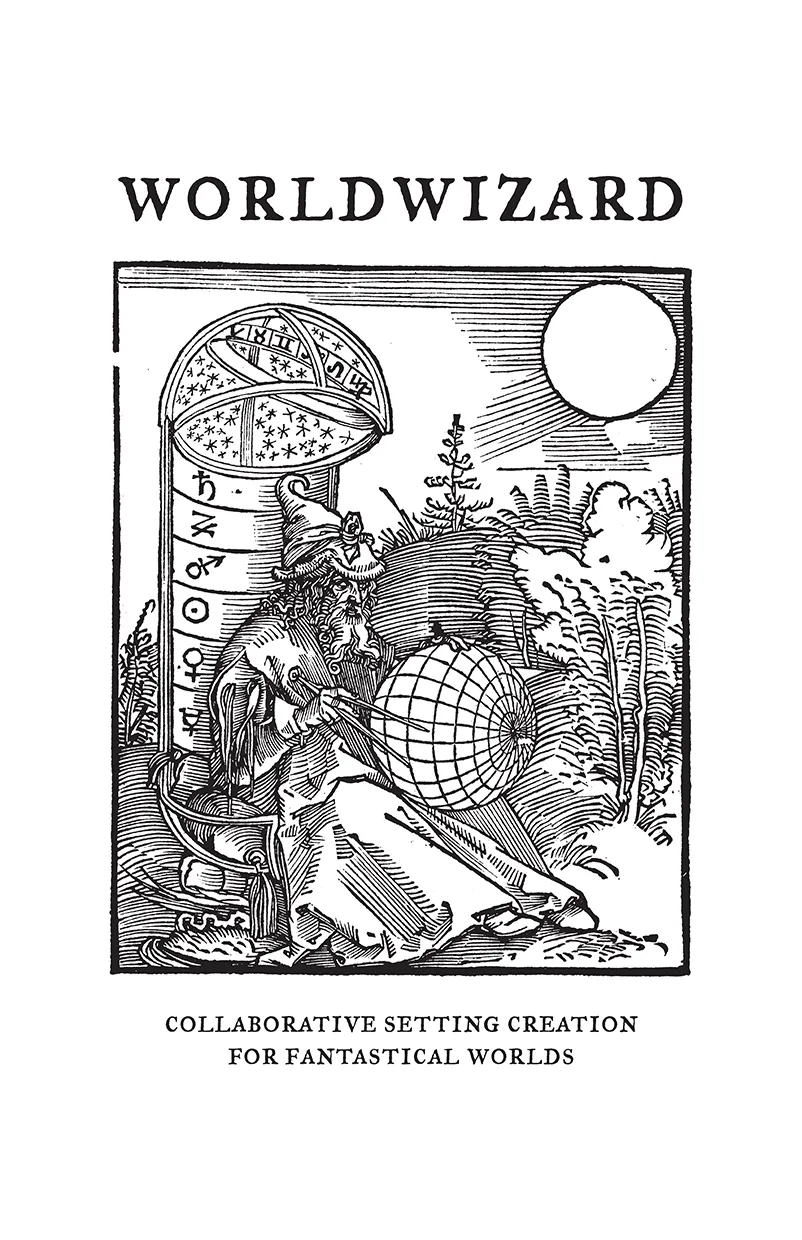
Play a game of Worldwizard.
There is no substitute for the drama, investment, and momentum that collaborative worldbuilding will provide for your game. If you’ve never tried a worldbuilding pregame, I recommend it in the strongest possible terms.5
Crucially, end the gathering after two rounds of Worldwizard, max. Only play in person long enough to ensure everyone understands the rules and is on the same page tonally. The game is significantly more enjoyable when played via discord posts. This not only creates a publicly visible written record of your world’s history, it also gives players lots of time to think carefully about their additions to the setting, source artwork, and - for impactful moments - write compelling prose.
Build on preexisting ideas twice as often as you introduce your own. Use these connections to create instability. Don’t depart from the real world so much that it burdens the imagination.6 Preserve pockets of mundanity to create dramatic contrast.
If you’re not sure what to add:
- Steal something from your inspiration lists.
- Create a problem.
- Mimic the faction dynamics from Fallout New Vegas and Dune.
- Commune with The Big Oracle.
Once Worldwizard is finished, schedule a second get together for…
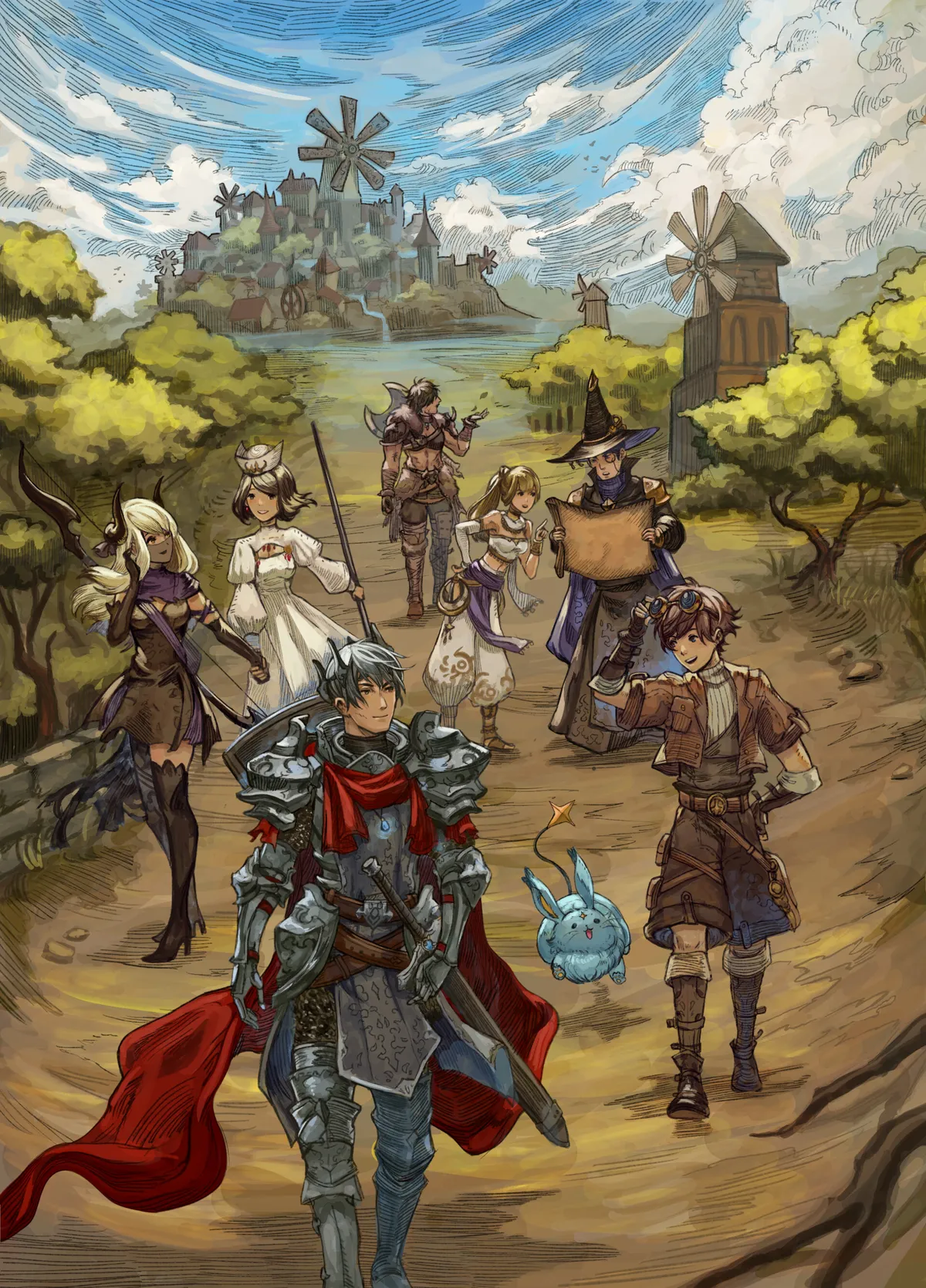
Character Creation
Before getting to the juicy bits, come to an agreement on:
- How long game sessions will last.
- How frequently you’ll play. (Weekly? Monthly?)
- Whether sessions will occur if one player can’t attend.
- Any house rules for your system of choice.7
Then, give each player the chance to introduce their special little guy.
Your collective goal is to play with your dolls until the table creates the party - the shared purpose that forces all of these weirdos to work together. Additionally, each character should have a preexisting relationship with two other party members. These relationships should be less “how did we meet”, and more “what do I want from you?”. If you’re stuck use a Connection prompt from a Daggerheart character sheet, or add a Person-Shaped Hole. This gathering, more than any other, benefits from wine.
Now that your players have clarified the parts of the setting they’re most interested in exploring, flesh out those bits first using the steps below.
This habit will grow into a hobby of its own with time.

Towns & Cities
Use Ex Novo to generate local history and a neighborhood map. Be curious. Aggressively google anthropological questions as they occur to you. Some examples from my own prep:
- Did nomadic cultures have permanent gathering places? What were these “seasonal cities” like?
- What personal belongings did steppe nomads carry with them, and why?
- How did religious worship in polytheistic societies differ from the Christian churches I am acclimated to?
As Kenneth Hite likes to say, no invented setting is as interesting as the real world. Steal from it liberally and embellish to taste.
After your Ex Novo game is finished, create three-ish points of interest within each neighborhood, ten max per settlement. Incorporate sounds and smells. If you’re stuck, grab a deck of cards and pull a couple of building prompts from Beak, Feather, & Bone.
Give most points of interest an associated NPC who wants things from, does things to, or does things for the party. Give them at least one of these three relationships with another NPC as well. Key them with Lore Blocks.
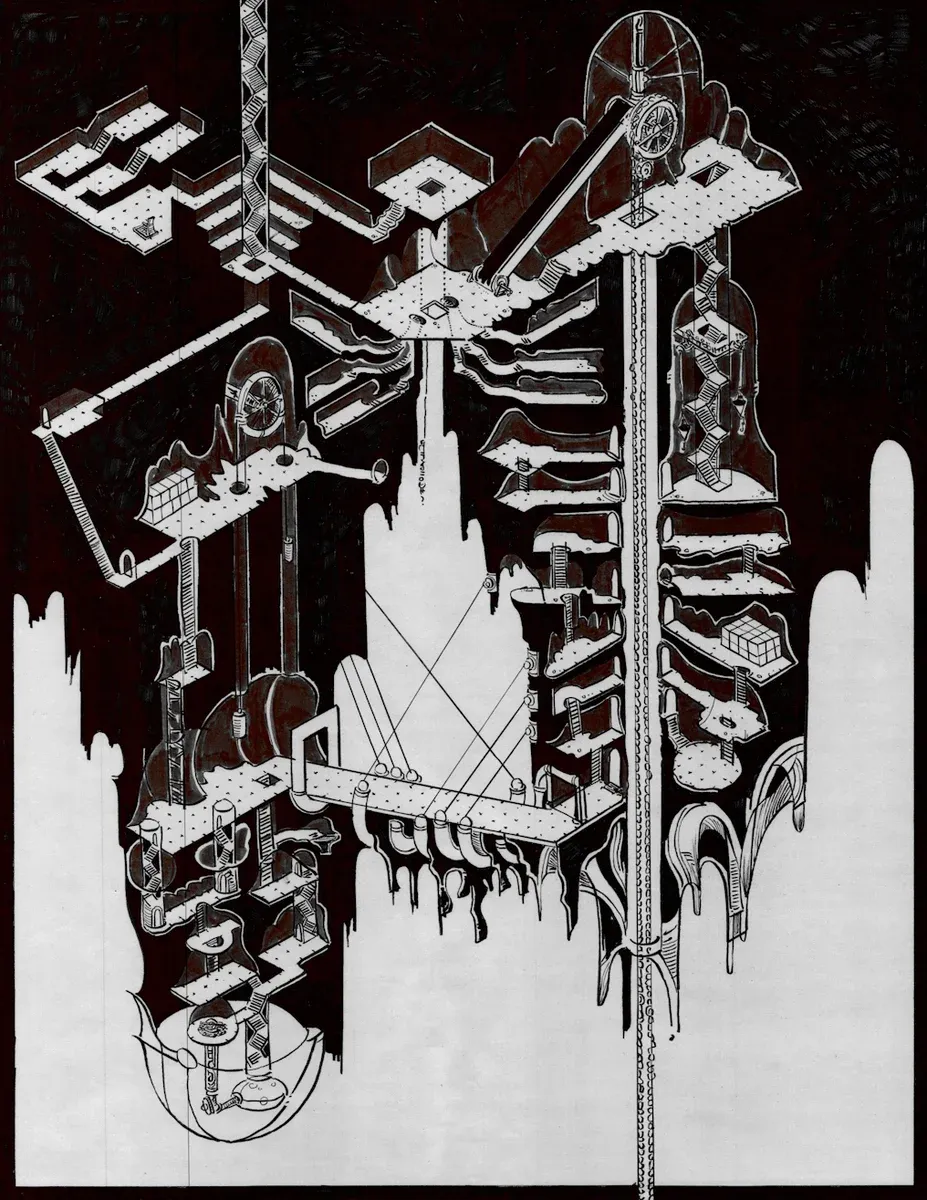
Dungeons
Consider the number of sessions you’d prefer the party spend in this dungeon. Add six times that many rooms.8 Fill each group of six with:
- an Entrance that sets the tone
- Monsters
- Treasure
- Strong Monsters with Treasure
- Useful Lore
- a Weird Little Freak
Draw six connections between rooms per group.
- 2 Open
- 2 Locked
- 1 Trapped
- 1 Secret
The Lore room and the Weird Little Freak should interact with the rest of the dungeon - provide hints, unlock doors, foreshadow enemies.
Locked rooms should be more easily found than key rooms. In 12+ room dungeons, make subsequent entrances increasingly hidden. Fill the environment with Held Kinetic Energy, and ensure your monsters immediately interact with the party.
Your game system likely has its own way to handle treasure. Supplement it with &&&&&&&&& Treasure. Again, do not include game ruining powers.
The Time Die
Whenever the party moves between dungeon rooms or spends meaningful time in a location, roll a 1d6 Time Die.
- Discovery
- Weather
- Timeline
- Attrition
- Omen
- Encounter
Discovery is a lucky break - the party finds minor treasure or stumbles into helpful information.
Weather is any visible change to the local environment. This might have gameplay implications (ex, a tunnel floods as the tide comes in), but should mostly be used for flavor.
Create a Timeline just before the start of each session - this should be one of the last things you prep. Write down at least three events, anywhere in the world, that will happen if the players don't intervene. This is intended to encompass Faction Turns, but is not limited to NPC actions. If the players are racing against time to find a rare medicine before the king succumbs to illness, put the king’s death on your timeline. Keep the world moving when they aren’t looking.
Attrition is a catchall for fatigue, equipment wear, and effect durations you don’t want to rigorously track. “Take a Stress”, “Lose 1d4 Spirit”, “Your torch goes out”.
Omens are hints toward future encounters. Provide actionable information on a common creature on this dungeon’s Random Encounter Table, or a Monster in a nearby room.
Encounters trigger a roll on the Random Encounter Table. If the players are in an exceptionally dangerous environment or are being actively hunted, you may increase the size of the Time Die (d8, d10, etc.). Every result higher than six is also an Encounter.
Random Encounters
Create a 2d6 encounter table for each dungeon and overworld region.
2 is always a Dragon, 12 is always a Wizard.
9, 10, 11 - Local NPCs and faction representatives. (Ideally someone the party already knows.)
6, 7, 8 - Monsters who live here.
3, 4, 5 - Monsters who live nearby. (Adapt these from the 6/7/8 results of other encounter tables.)
Give the strong a good reason to be here, and the weak a bad reason to be here. No matter their reason, they must always be doing something. It's okay to keep these encounters more barebones - use the location they happened to show up in and the other characters already in the scene as improv seeds.
Remember that the primary purpose of random encounters is to make wasting time dangerous. Give them pocket change but never true treasure. Having the monsters immediately jump the party is boring and repetitive, but these creatures should be hostile by default.
Overworld encounters are harder to run than Dungeon encounters because you lack room keys to play off. To alleviate this, roll twice on the random encounter table then have the party walk in on an ongoing interaction between those two groups.
Create an Average Stats Table
Stating up individual monsters, traps, and effects is a waste of time. Instead, learn your game system as if it was a language.
Create a table with columns for each important game statistic (“HP, AC, Damage” etc.) and rows for each ‘tier of power’ in your game system. These rows can be either literal character levels, or degrees of effect (“Minor, Major, Massive” etc.). Skim through your game’s monster manual and infer what constitutes “A normal amount” of HP, Damage, etc for each tier of power. Get a feel for how much variance exists between these numbers within each tier, and stick within those limits. Stick the completed table on your GM screen.
If you are playing a crunchy game, a nerd has probably done this work for you.
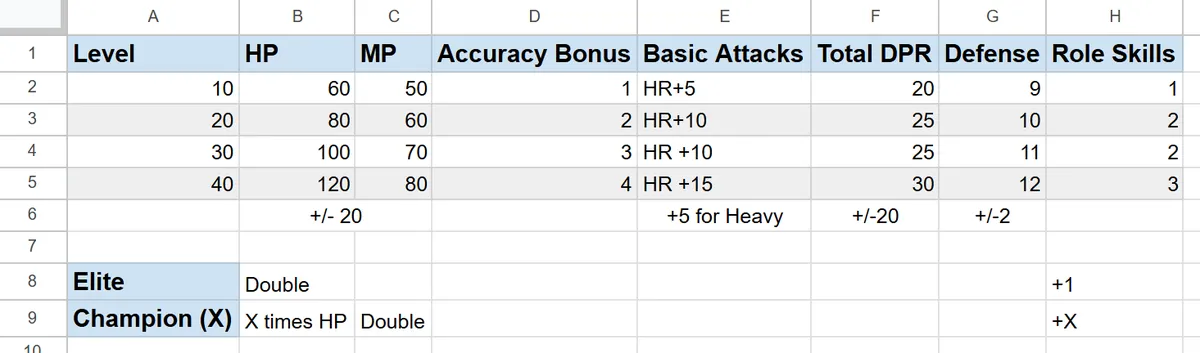
This is the Average Stats table for my Fabula Ultima game. It took thirty minutes of skimming and typing to create. I’ll never create another statblock.
Monsters should fulfill one of the five following strategic roles.
Brute - High HP, low Defense, consistent Melee Damage. Restricts player movement.
Ambusher - High accuracy, Melee & Ranged, inconsistent Burst Damage. Fast.
Artillery - Low HP, consistent Ranged Damage. AoEs.
Saboteur - Simple Debuffs, Low HP. Harsh telegraphed punishments.
Support - Simple Buffs, Damage Reduction, Low HP. Never direct HP restoration.
Include a mix of 2-3 roles per encounter.

Setpiece Encounters
The perfect campaign will have three in total. Never force them to happen. The easiest way to ensure you don’t waste effort is to end sessions on cliffhangers before dramatic confrontations.
Do not use a VTT. Embrace vague, janky whiteboard drawings. Let the fiction stay where it’s most vibrant - our minds.
Ensure diverse, interesting encounter goals using Lancer’s Sitreps, then make them spicy. Inject movement into every action - force players to advance & retreat, throw them around like ragdolls, give the boss a reliable way to escape melee.
Be predictably unfair. Do not merely threaten bad things, do bad things. Now is not the time to be soft. Maintain tension by resolving turns as quickly as possible.
Find Good Music
This is the most difficult part of prep.9
You want a mix of ambient background tracks that evoke a physical space (wind, rain, street chatter), leitmotifs, and thematic beats for action scenes. In all cases, ask the following questions:
- Would this song become annoying if it was on repeat for an hour?
- Could I clearly understand my players if they were talking over this song?
These two criteria eliminate most songs shorter than ten minutes, the majority of film soundtracks, everything with lyrics, and electric guitars. Video games remain the best medium to find tracks fitting this criteria10, but a lot of you are probably looking for Dungeon Synth without realizing it. Epic Orchestral Remixes are a market failure.
Kenku Bot is the best DM-DJing tool11, though I’ve been using this outrageously sketchy website to share youtube audio for over a decade.
Damn Girl this is a Lot
Yeah.
But it’s fun! For its own sake, and for the wonder it paints on the faces of people you care about.
Are you a sicko or not?
———————————————————————————
For art, music, and anything in life that reminds you of the game.↩
A real example from one of my campaigns.↩
This is the only safety tool you need. In the context of a home game I take Quinns’s criticism of the X-card as fatal. Besides, safety is overrated.↩
In the unlikely event that your players are adamantly opposed to any form of collaborative worldbuilding, substitute a solo game of Foundations. Then, create a one page Campaign Guide to assist with character creation. They have only themselves to blame for the paperwork.↩
In accordance with this principle, the only non-human species I permit in my fantasy games are beastfolk. Discuss where they fall on The Furry Scale. I’ve never read Tolkien, and have never really understood what all the fuss is about with Elves, Dwarves, Halflings, and Orcs.↩
Do not simply declare the existence of house rules. Propose them, explain your rationale, and ask for consent. Players should also be free to propose house rules.↩
This is a minor tweak on Mythic Bastionland’s Site rules inspired by the Dungeon Checklist, which is itself a minor tweak on Marcia’s bite-sized dungeons.↩
This might be because I know nothing about music, rarely listen to music, and have bad taste.↩
Special shoutouts to Signalis, Metroid Prime, most strategy games, Shenmue, Elden Ring, and overworld themes in general.↩
If you don’t have Youtube Premium you can avoid ads in Kenku by using the popup player. Add “_popup” after the word “watch” in the url. Sadly not all songs will be playable in this mode.↩